At a glance
How the two compare on the things buyers ask about most. Longer bar = stronger on that point.
Park homeBungalow
Lower purchase price
Low upkeep
Ready-made community
Owning the land
Mortgage available
Keeping your sale proceeds
The price you pay up front
For most downsizers this is where the conversation starts. A park home of a similar size will usually cost noticeably less than a bungalow in the same area, because you are buying the home, not the land it stands on. That gap is often what makes the move work: many buyers sell a family house, buy a park home outright and keep a meaningful sum in the bank for the years ahead.
There are smaller savings too. A park home is legally a moveable dwelling rather than land, so the purchase normally carries no Stamp Duty Land Tax and does not need the conveyancing a house does, although we would always suggest asking a solicitor who knows park homes to look over the paperwork. A bungalow purchase involves Stamp Duty above the threshold, conveyancing, searches and a survey, all of which add up before you have picked up the keys.
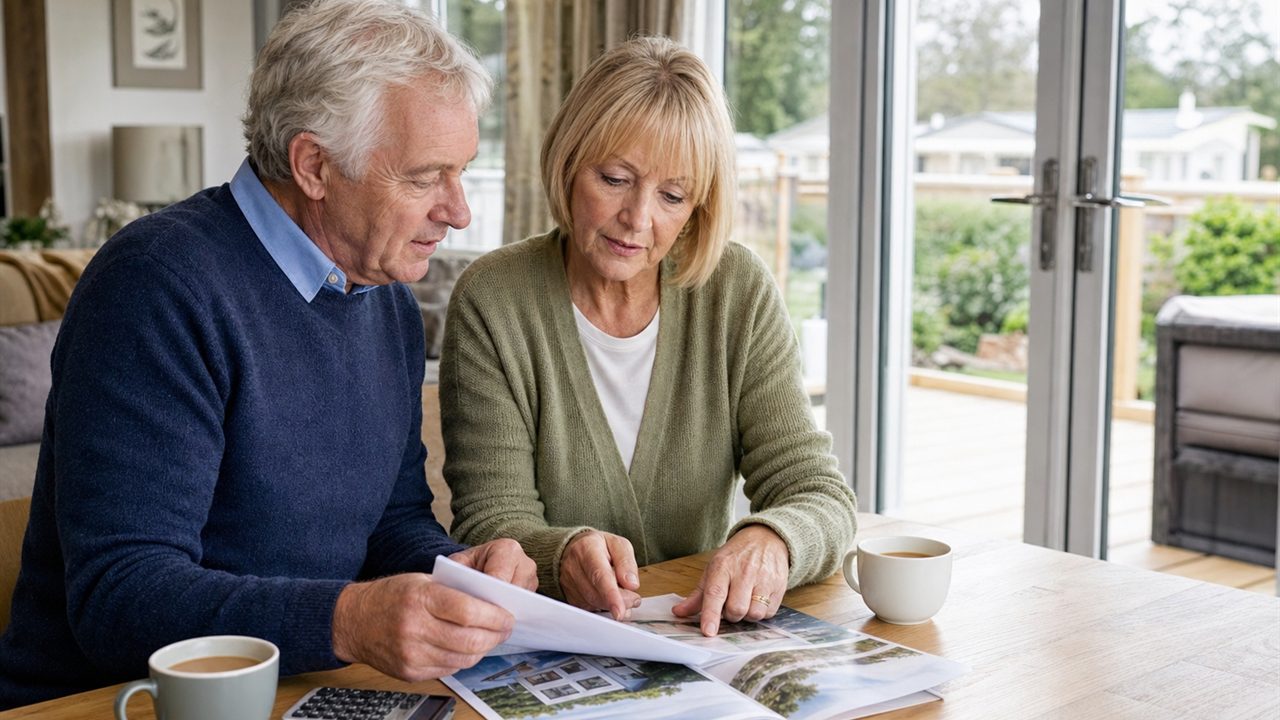 Most buyers fund a park home from the sale of their previous house.
Running costs: pitch fee versus upkeep
This is the trade-off people most often misunderstand. With a park home you pay the park owner a pitch fee, usually monthly, for the right to station your home on the park and for the upkeep of the shared grounds, roads and lighting. In England it can be reviewed once a year, and since 2 July 2023 the annual increase is linked to the Consumer Prices Index (CPI) rather than the higher Retail Prices Index. Fees vary a great deal from park to park and pitch to pitch, so ask each park for its current figure in writing.
A bungalow has no pitch fee, but nobody else looks after it either. Roof repairs, guttering, fencing, the drive and the garden are all yours to arrange and pay for, and they tend to arrive at the least convenient moment. Both homes pay council tax; park homes are often in one of the lower bands. Insurance needs care in either case, and a park home needs a specialist park home policy rather than a standard house policy.
What a park home usually costs to run
- A monthly pitch fee, reviewed yearly in line with CPI
- Council tax, often a lower band
- Gas, electricity and water (sometimes billed by the park)
- Specialist park home insurance
- Upkeep of your own home and small garden
What a bungalow usually costs to run
- No pitch fee
- Council tax for its band
- All utilities, billed direct
- Buildings and contents insurance
- Every repair inside and out, and the full garden
Ownership and security
When you buy a bungalow you own the bricks and, in most cases, the ground they stand on. With a park home you own the home but rent the pitch, under a written agreement with the park owner. On a protected residential site in England that agreement is governed by the Mobile Homes Act 1983, which gives you strong rights: you can stay for as long as you keep to the terms, you can sell the home on the open market, and you can pass it on to family.
Before you buy, read the park's Written Statement and site rules. They set out the pitch fee, when it is reviewed, what you may and may not do (pets, age limits, sheds, parking) and how a sale works. The park pack each park sends through myparkhome includes these documents, so you can compare parks side by side before you visit.
See the real figures before you decideGet current pitch fees, the written statement and site rules from parks in your chosen area, free.
Get park packs
Mortgages and paying for it
Most mainstream lenders do not offer mortgages on park homes, because the land is not part of the purchase. That is why most park home buyers pay with the money released from selling their previous home. A small number of specialist lenders offer loans, often on different terms from a mortgage. If you need to borrow, a bungalow is far easier to finance, and you can also use equity release on a bungalow later in life, which is not normally possible on a park home. If borrowing is part of your plan, speak to an FCA-authorised adviser before you commit.
Selling later and what you keep
When you sell a park home on a protected site in England, the park owner is entitled to a commission of up to 10% of the sale price. You can sell privately or through the park, and the park owner must be given the chance to approve the buyer under the rules of the site. Park homes also tend to hold their value differently from houses: because you do not own the land, a home can lose value as it ages, much as a car does, while a well-placed bungalow may rise with the wider market.
The fairest way to think about it is that a park home is a lifestyle purchase that frees up money now, while a bungalow is a property investment that ties more money up but may grow. Neither is wrong; they simply suit different plans.
Day-to-day life
This is where park homes often win buyers over. Parks are usually quiet, well kept and designed for people of a similar age, many with a minimum age of 45, 50 or 55. Neighbours tend to know each other, there may be a clubhouse or social events, and the shared grounds are looked after for you. Many parks are gated or have a warden, which buyers say gives them real peace of mind when they travel.
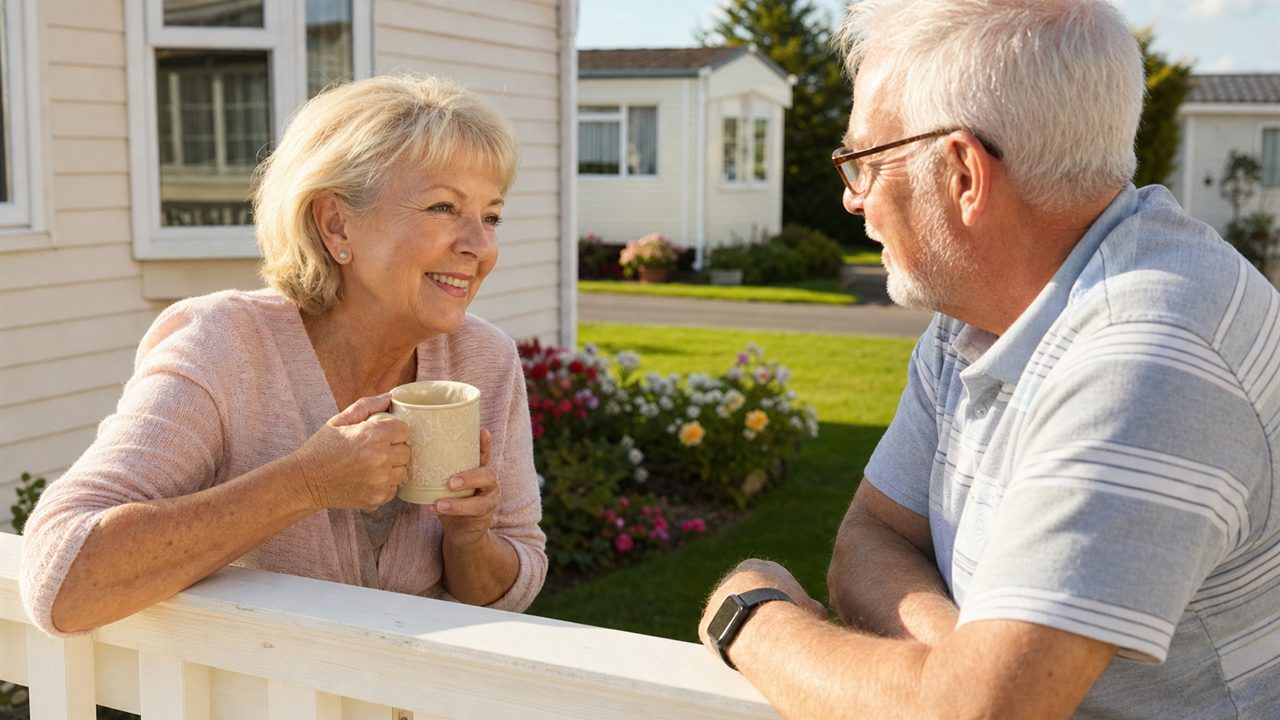 Neighbours who know each other are one of the reasons people choose a park.
A bungalow gives you more freedom: no park rules, a bigger garden if you want one, room to extend, and the choice of exactly which street and town you live in. If you have grandchildren to stay often, large pets or a hobby that needs a workshop, check carefully what each park allows.
The verdict
Choose a park home if you want single-storey living at a lower price, to free up money from your current home, low upkeep and a ready-made community, and you are comfortable paying a pitch fee and living by park rules. Choose a bungalow if you need a mortgage, want to own the land, expect the home to grow in value, or want complete freedom over how you live and what you build.
Whichever way you lean, the best next step is the same: look at real homes and real figures. Compare the parks in the counties you like, read their site rules, and visit two or three before you decide.
Find park homes that fit your budgetChoose your counties and budget, and we'll show you the homes and parks that match, with their park packs.
Find park homes